
As electric vehicle adoption expands across India, the term 'fast charging' is frequently discussed. However, a high-power DC charger for electric vehicle infrastructure operates fundamentally differently from standard residential or commercial AC wall units. While AC charging relies on the vehicle's onboard converter, DC fast charging delivers high-voltage direct current straight to the battery pack, enabling rapid energy transfer.
Whether you are an EV owner planning highway routes, a commercial business evaluating site monetization, or a fleet manager looking for reliable infrastructure, understanding how DC fast charging works, what hardware setup costs in 2026, and how grid protection impacts longevity is essential for making informed investments.
The Engineering Behind Fast Charging: How DC Fast Charging Works
Every EV battery stores and discharges energy as direct current (DC). However, the electrical grid supplies alternating current (AC). In conventional Level 2 AC charging, the conversion from AC to DC happens inside the vehicle via its onboard charger (OBC).
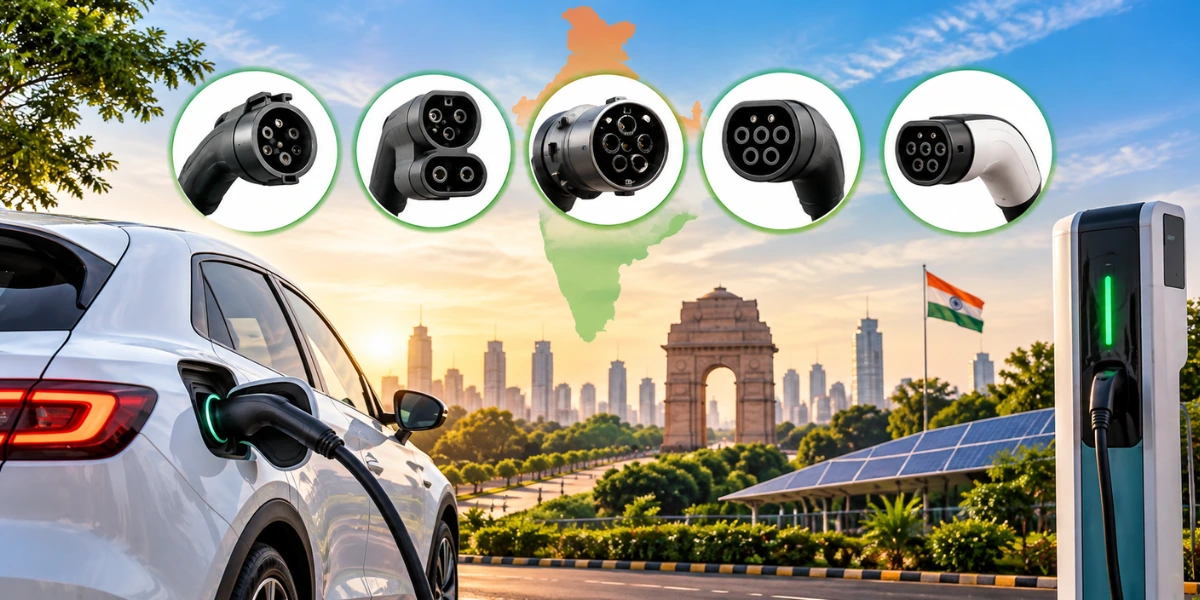
High-power DC fast charging shifts this entire conversion process outside the vehicle. Heavy-duty power electronics inside the charging station handle the AC-to-DC conversion at high wattage before delivering electricity straight to the battery. In India, the standardized CCS2 (Combined Charging System 2) connector enables this direct high-current handshake.
STEP-BY-STEP DC CHARGING FLOW:
- Handshake & Safety Sync: The station and vehicle exchange data on voltage limits, battery temperature, and state of charge (SoC).
- External AC-to-DC Conversion: Station power electronics convert high-voltage grid AC directly to DC power.
- Direct Battery Delivery: Converted DC power bypasses the car's OBC, flowing directly to the traction battery pack under BMS control.
DC Charging Speed Levels & Industry Architecture
Not all DC fast chargers perform identically. In the Indian EV landscape, DC fast charging hardware is categorized by power capacity, primary application, and battery compatibility:
- Standard DC Fast Chargers (30 kW – 60 kW): Common across city charging hubs, retail centers, and commercial fleet depots. Ideal for mid-size EV batteries (30–60 kWh), completing a 20% to 80% charge in 45–60 minutes.
- High-Power DC Chargers (60 kW – 120 kW): Deploys along highway corridors, petrol pumps, and high-turnaround commercial hubs. Designed for modern 400V battery architectures, delivering a 20% to 80% charge in 25–35 minutes.
- Ultra-Fast DC Chargers (120 kW – 240+ kW): Engineered for heavy commercial vehicles, buses, highway charging plazas, and high-voltage 800V EV platforms, delivering 100+ km of range in under 15 minutes.
How Much Does a DC Fast Charger Cost to Use in India? (Per-kWh Pricing)
For individual EV drivers and commercial fleet operators, public DC fast charging is priced on a per-kilowatt-hour (kWh) basis. While domestic home AC charging costs between ₹6 and ₹10 per kWh, public DC fast charging in India typically ranges from ₹15 to ₹26 per kWh in 2026.
This per-kWh rate accounts for commercial electricity tariffs, DISCOM fixed demand charges, operator software overhead, and capital recovery. For a typical 40 kWh EV battery, a 20% to 80% top-up (24 kWh delivered) on a public DC fast charger costs approximately ₹360 to ₹620.
How Much Does It Cost to Install a DC Fast Charging Station? (CapEx & OpEx Breakdown)
Setting up a commercial DC fast charging station requires both initial Capital Expenditure (CapEx) and ongoing Operational Expenditure (OpEx). Understanding these financial requirements is vital for businesses, petrol pump operators, and real estate developers.
Itemized Capital Expenditure (CapEx)
The total hardware and installation cost for setting up a commercial DC fast charging station in India ranges from ₹12 Lakh to ₹30+ Lakh per unit, depending on power rating:
- EVSE Machine Cost: Dual-gun CCS2 30 kW to 60 kW units typically cost between ₹3.5 Lakh and ₹10 Lakh. High-power 120 kW–240 kW machines range from ₹12 Lakh to ₹22+ Lakh.
- Grid Connection & Transformer Upgrades: Sanctioned load approvals, dedicated LT/HT line connections, and 11 kV transformer installations range from ₹2.5 Lakh to ₹8 Lakh depending on DISCOM distance and power demand.
- Civil Works & Safety Infrastructure: Concrete plinths, protective canopies, bollards, fire safety equipment, and earthing pits account for ₹1.5 Lakh to ₹3.5 Lakh.
- Management Software & Connectivity: OCPP-compliant CMS integration, M2M SIM telemetry, and mobile payment gateway setup require ₹50,000 to ₹1.5 Lakh.
Operational Expenditure (OpEx) & DISCOM Tariffs
Operating a commercial station involves recurring costs including fixed DISCOM demand charges (based on sanctioned kVA load), commercial electricity usage, CMS software maintenance, real estate rent/revenue share, and routine preventive maintenance.
Grid Protection & Engineering for Indian Weather Conditions
A major challenge facing EV infrastructure in India is power grid variability and weather extremes. Standard imported chargers often experience premature failure due to voltage surges, broad input voltage swings, high ambient heat, and monsoon moisture.
CRITICAL INFRASTRUCTURE REQUIREMENTS IN INDIA:
- Wide Input Voltage Tolerance: Engineered to operate smoothly across 170V to 270V grid fluctuations without shutting down.
- Multi-Layer Surge & Fault Protection: Heavy-duty insulation, short-circuit prevention, over-temperature cutoff, and earth-leakage protection.
- All-Weather Weatherproofing: IP65-rated dust and water resistance combined with active thermal management to handle extreme summer heat and heavy rainfall.
Commercial Setup Costs & Revenue Comparison Table
| Station Category | Power Rating | Est. Total Setup Cost (CapEx) | Primary Best-Fit Location | Typical Charging Time (20-80%) |
|---|---|---|---|---|
| Standard Commercial DC | 30 kW – 60 kW | ₹12 Lakh – ₹18 Lakh | City hubs, fleets, malls, hotels | 40 – 60 minutes |
| High-Power Commercial DC | 60 kW – 120 kW | ₹18 Lakh – ₹30 Lakh | Highway corridors, petrol pumps | 20 – 35 minutes |
| Ultra-Fast Commercial Depot | 120 kW – 240+ kW | ₹30 Lakh – ₹50+ Lakh | Fleet depots, bus terminals, expressways | 12 – 20 minutes |
Frequently Asked Questions
How much does a DC fast charger cost to install in India?
A standard 30–60 kW commercial DC fast charger costs between ₹12 Lakh and ₹18 Lakh total to set up, including hardware, transformer, civil work, and approvals. High-power 120 kW+ installations range from ₹25 Lakh to ₹40+ Lakh.
Does frequent DC fast charging damage an EV battery?
Occasional DC fast charging is completely safe for modern EV batteries equipped with active liquid cooling. However, regular daily use generates heat, so EV manufacturers recommend using Level 2 AC charging for overnight routines and reserving DC fast charging for highway travel or quick top-ups.
What is the GST rate on EV charging equipment in India?
EV charging hardware and EV charging services benefit from a concessional 5% GST rate under Indian government clean energy incentives, compared to standard 18% commercial equipment tax rates.
What electricity connection is required for a commercial DC fast charger?
Commercial DC chargers require a 3-phase LT (Low Tension) or HT (High Tension) connection with dedicated sanctioned load matching the charger capacity (e.g., a 60 kW dual-gun charger typically requires 65–70 kVA sanctioned load).
Key Takeaways
- Fast Charging Converts Power Externally: DC chargers bypass the vehicle's onboard converter, delivering direct DC current to the battery for rapid charging.
- Clear Per-kWh Costs for Drivers: Expect ₹15 to ₹26 per kWh for public DC fast charging in India, compared to ₹6 to ₹10 for home AC charging.
- Itemized Setup Costs for Investors: Setting up a commercial station ranges from ₹12 Lakh to ₹30+ Lakh per unit across hardware, transformer, civil work, and software.
- Built for Grid Resilience: Heavy-duty protection against voltage swings, surge events, and monsoon weather is essential for long station lifespan in India.
Build Future-Ready Commercial EV Infrastructure with Rudved Automobile India
Navigating commercial EV charging investments requires choosing heavy-duty, high-efficiency equipment built specifically for Indian conditions. As one of the leading EV charger manufacturers in India, Rudved Automobile India Pvt. Ltd. engineers reliable, intelligent AC wall units and high-power DC fast charging systems designed to maximize uptime and operational ROI.
PARTNER WITH RUDVED AUTOMOBILE INDIA: Looking for the best EV charger in India for your commercial site, hotel, petrol pump, or fleet depot?
Rudved Automobile India delivers end-to-end charging solutions with built-in surge protection, wide input voltage tolerance, and weatherproof engineering.
- • Explore Our Product Range: Visit rudvedev.com to view our complete lineup of AC and DC fast chargers.
- • Request a Site Consultation: Contact our technical engineering team today to receive a customized CapEx proposal and turn-key installation plan for your business.