
How DC Fast Charging Works & What It Costs in India: Setup, Hardware & Operational Guide

A 2026 cost guide covering home, society, and commercial EV charging — with the government policy and green energy push driving it forward.

India's shift to electric mobility isn't happening because of some distant future promise — it's happening right now, at pace, for very practical reasons. Fuel prices keep climbing, environmental concerns keep growing, and both households and businesses are responding by moving to EVs. The numbers back this up: EV penetration crossed 12% of total vehicle retail sales for the first time in June 2026 up from roughly 8–8.5% a year earlier, with electric vehicle registrations for the year already running past 26 lakh units nationally. Charging infrastructure is scaling to match — India now has over 52,000 public EV charging stations, more than double the count from early 2025, according to figures the government shared in Parliament.

Once the decision to go electric is made, one question comes up almost immediately: what does it actually cost to install an EV charger in India? Whether you're planning a charger at home, in your housing society, or as a commercial investment, this guide breaks down the real numbers — installation cost, running cost, and the government support that's actively bringing both down. And if you'd rather skip the research and just get a number for your own home, Rudvedev offers a free readiness assessment before you spend anything on hardware.

Understanding EV Charging Cost in India

EV charging cost in India comes down to three variables:

  • Electricity price — residential tariffs typically fall between ₹6 and ₹12 per kWh, depending on your state and consumption slab.
  • Charger type — AC charging (home/office) versus DC fast charging (public, highway).
  • Where you charge — home charging is consistently the cheapest option; public charging costs more for the convenience and speed.

Here's what that looks like in practice: for an EV with a 30–40 kWh battery charged at ₹10 per kWh, a full charge costs roughly ₹300–₹400, working out to about ₹1–₹1.50 per kilometre driven. That's the core reason EVs are among the cheapest vehicles to run in India today — installation cost is a one-time investment; running cost is what compounds in your favour every month after.

Cost to Charge an Electric Vehicle: Practical Scenarios

Home Charging (Most Cost-Efficient)

  • Cost per unit: ₹6 – ₹10
  • Full charge cost: ₹240 – ₹400
  • Typical monthly spend: ₹2,000 – ₹4,000

Home charging is the cheapest and simplest way to run an EV day to day, especially with a dedicated EV tariff where your DISCOM offers one.

Public Charging (Convenience and Speed)

  • Cost per kWh: ₹12 – ₹25
  • A fast-charge session: ₹300 – ₹800

Public charging costs more than home charging, but the expanding network — now past 52,000 stations nationally — makes it a genuinely reliable option for highway travel and top-ups when you're away from home.

AC vs. DC Charging

AC charging (home and office) is the economical option, typically taking 6–8 hours for a full charge. DC fast chargers cost more to use but bring that down to 30–60 minutes — the right choice for long-distance travel, not daily routine charging.

EV Car Charging Cost vs. EV Bike Charging Cost

Vehicle Type Battery Capacity Full Charge Cost
Electric car30 – 60 kWh₹200 – ₹600
Electric two-wheeler2 – 4 kWh₹15 – ₹40

This is exactly why electric two-wheelers remain the fastest-growing EV segment in India — the running cost for daily city commuting is close to negligible, while electric cars still deliver a decisive cost advantage over petrol equivalents at scale.

EV Charger Installation Cost in India

Home Charger Installation

Charger Type Cost Range Best For
Basic charging station₹15,000 – ₹50,000Personal, everyday home charging
Smart charging station₹50,000 – ₹1,20,000App control, scheduling, energy monitoring, load balancing

A basic setup covers the essentials; a smart wallbox adds app connectivity, scheduled charging (useful for off-peak tariffs), and usage tracking — features that pay off if you're charging daily or planning to add solar later.

Commercial EV Charger Installation

Setup Type Cost Range Appropriate Use Cases
DC fast charger installation₹5 Lakh – ₹30 Lakh+Highways, commercial complexes, fleet operations

Commercial DC fast-charging setups require considerably more planning than a home wallbox — from electrical load sanctioning to civil work and payment-gateway integration — which is reflected in the wider cost band.

Extra Installation Costs to Budget For

Beyond the charger unit itself, a full installation typically involves:

  • Electrical cabling and wiring
  • Transformer or sanctioned-load upgrades
  • Civil works and mounting
  • Safety systems (dedicated MCB and RCCB protection — critical for the sustained current an EV charger draws)
  • Software integration for commercial/smart setups

A proper site assessment before you buy hardware is the single best way to avoid these showing up as unexpected costs later — it's the first thing a certified installer like Rudvedev checks before recommending any hardware.

Location-Based Infrastructure Growth

EV charging infrastructure is expanding unevenly but rapidly across India, generally tracking wherever EV adoption and state-level incentives are strongest:

  • Metro and Tier-1 cities — Delhi, Mumbai, Bengaluru, and Pune are seeing the fastest growth in both residential and commercial charging installations, driven by high EV density and organised RWA/DISCOM processes.
  • Emerging Tier-2 hubs — cities like Lucknow, Chandigarh, and Ghaziabad are catching up quickly, helped by state EV policies and rising local demand.
  • Highway corridors — national programmes are actively funding DC fast-charger deployment along major highway stretches to close the range-anxiety gap for long-distance travel.

The top five states currently account for roughly 60% of India's public charging infrastructure — a gap that's expected to narrow considerably as state EV policies mature over the next few years.

Government Support and Incentives — And the Green Economy Push Behind Them

India is actively lowering the cost barrier to EV charging through a combination of central and state-level support:

  • PM E-DRIVE — the central government's flagship scheme, offering subsidy support that can cover up to 100% of costs for charging points at residential complexes with public access, and tiered support for high-traffic commercial locations.
  • State-level incentives — many states offer their own subsidies and preferential EV electricity tariffs on top of central support, such as the Maharashtra Electric Vehicle Policy.
  • GST treatment — EVs sold with a bundled charger are taxed at a concessional 5% GST (cut down from 12% under a 2019 GST Council decision). A standalone wallbox charger purchased separately currently attracts 5% GST — worth factoring in if you're buying hardware independently of your vehicle.
  • FAME-II legacy infrastructure support — the earlier central scheme that seeded much of today's public charging operator ecosystem, alongside electric bus deployment.

The Saptdhara Connection

In his 80th Independence Day address, Prime Minister Narendra Modi placed green mobility inside the "Saptdhara" — seven-pillar — vision for a Viksit Bharat by 2047, naming it alongside green hydrogen, renewable energy, and energy storage as part of the country's green economy pillar. He pointed to India's solar capacity growing from roughly 2 GW in 2014 to about 160 GW today, with a 500 GW renewable energy target set for 2030, and highlighted the PM Surya Ghar Muft Bijli Yojana, under which more than 50 lakh households now generate their own solar power.

For EV owners, that connection is practical, not just symbolic: a home charger paired with rooftop solar can bring your per-kWh charging cost close to zero on sunny days, and several states now offer solar-linked subsidies specifically for EV charging setups — making the combination increasingly the cheapest way to run an EV in India.

Is Installing a Home EV Charger Worth It?

For most EV owners, yes — and the reasons compound over time:

  • Lower long-term charging cost compared to relying on public stations
  • Overnight charging convenience — plug in, wake up to a full battery
  • Reduced dependency on public infrastructure that's still catching up to demand in many areas
  • Gentler AC charging is better for long-term battery health than frequent DC fast charging

Commercial EV Charging: A Business Opportunity

Beyond personal use, EV charging infrastructure is becoming a genuine business opportunity for property owners and operators.

Ideal for:

  • Residential societies
  • Office complexes
  • Malls and retail spaces
  • Fleet operators

Revenue streams:

  • Direct charging fees
  • Increased customer footfall and dwell time
  • Sustainability branding for the property or business

With government subsidy support reducing upfront capital cost, and EV adoption climbing every quarter, commercial charging infrastructure is shifting from a cost centre to a genuine revenue-generating asset for the businesses that get in early.

EV Charging Cost vs. Petrol: A Clear Advantage

Parameter EV Petrol
Cost per km₹1 – ₹1.5₹7 – ₹10
Monthly running cost₹2,000 – ₹4,000₹8,000 – ₹15,000
MaintenanceLowHigh

This gap is the single biggest financial argument for going electric — and it's why, despite the upfront installation cost, most EV owners recover that investment well within the first two to three years of ownership.

Final Thoughts

Understanding EV charger installation cost is the first real step toward making a confident switch to electric mobility. There's an upfront cost — hardware, safety switchgear, and possibly a load upgrade — but the combination of falling running costs, expanding infrastructure, and active government support means the economics keep getting better, not worse.

Whether you're evaluating a home charger for personal use or planning a commercial installation as a business investment, the right move is the same: get a proper site assessment, understand your applicable subsidies, and choose a certified installer who won't cut corners on safety.

Planning an installation? Get in touch with Rudvedev for expert consultation, a customised cost estimate, and a safe, certified installation for your home, society, or business.

As electric vehicle adoption expands across India, the term 'fast charging' is frequently discussed. However, a high-power DC charger for electric vehicle infrastructure operates fundamentally differently from standard residential or commercial AC wall units. While AC charging relies on the vehicle's onboard converter, DC fast charging delivers high-voltage direct current straight to the battery pack, enabling rapid energy transfer.

Whether you are an EV owner planning highway routes, a commercial business evaluating site monetization, or a fleet manager looking for reliable infrastructure, understanding how DC fast charging works, what hardware setup costs in 2026, and how grid protection impacts longevity is essential for making informed investments.

The Engineering Behind Fast Charging: How DC Fast Charging Works

Every EV battery stores and discharges energy as direct current (DC). However, the electrical grid supplies alternating current (AC). In conventional Level 2 AC charging, the conversion from AC to DC happens inside the vehicle via its onboard charger (OBC).

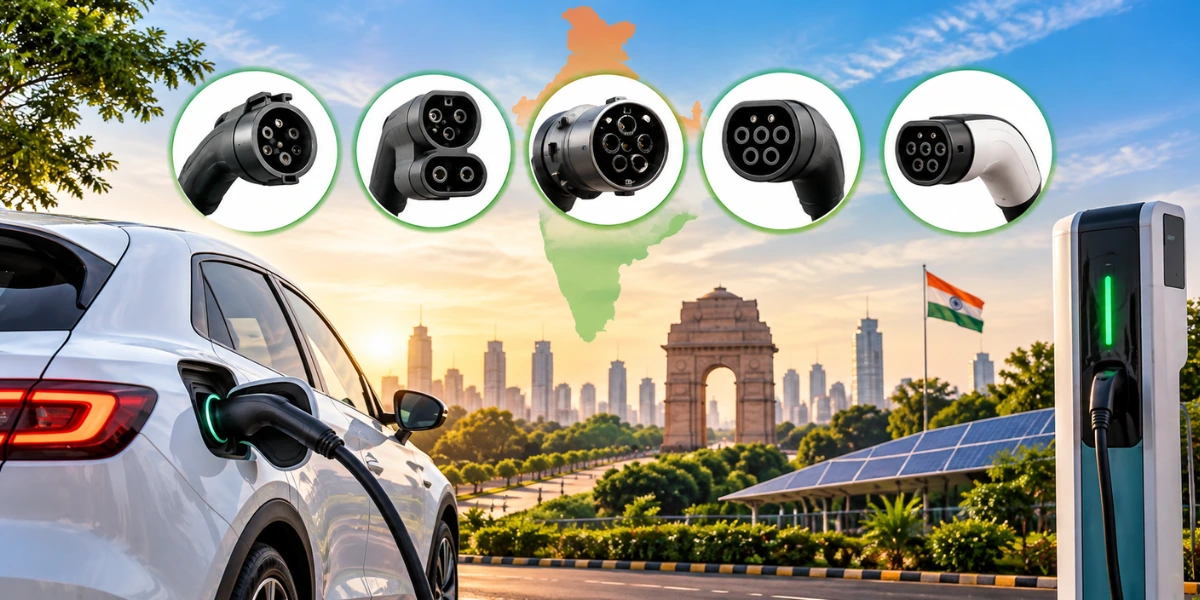
High-power DC fast charging shifts this entire conversion process outside the vehicle. Heavy-duty power electronics inside the charging station handle the AC-to-DC conversion at high wattage before delivering electricity straight to the battery. In India, the standardized CCS2 (Combined Charging System 2) connector enables this direct high-current handshake.

STEP-BY-STEP DC CHARGING FLOW:

  1. Handshake & Safety Sync: The station and vehicle exchange data on voltage limits, battery temperature, and state of charge (SoC).
  2. External AC-to-DC Conversion: Station power electronics convert high-voltage grid AC directly to DC power.
  3. Direct Battery Delivery: Converted DC power bypasses the car's OBC, flowing directly to the traction battery pack under BMS control.

DC Charging Speed Levels & Industry Architecture

Not all DC fast chargers perform identically. In the Indian EV landscape, DC fast charging hardware is categorized by power capacity, primary application, and battery compatibility:

  • Standard DC Fast Chargers (30 kW – 60 kW): Common across city charging hubs, retail centers, and commercial fleet depots. Ideal for mid-size EV batteries (30–60 kWh), completing a 20% to 80% charge in 45–60 minutes.
  • High-Power DC Chargers (60 kW – 120 kW): Deploys along highway corridors, petrol pumps, and high-turnaround commercial hubs. Designed for modern 400V battery architectures, delivering a 20% to 80% charge in 25–35 minutes.
  • Ultra-Fast DC Chargers (120 kW – 240+ kW): Engineered for heavy commercial vehicles, buses, highway charging plazas, and high-voltage 800V EV platforms, delivering 100+ km of range in under 15 minutes.

How Much Does a DC Fast Charger Cost to Use in India? (Per-kWh Pricing)

For individual EV drivers and commercial fleet operators, public DC fast charging is priced on a per-kilowatt-hour (kWh) basis. While domestic home AC charging costs between ₹6 and ₹10 per kWh, public DC fast charging in India typically ranges from ₹15 to ₹26 per kWh in 2026.

This per-kWh rate accounts for commercial electricity tariffs, DISCOM fixed demand charges, operator software overhead, and capital recovery. For a typical 40 kWh EV battery, a 20% to 80% top-up (24 kWh delivered) on a public DC fast charger costs approximately ₹360 to ₹620.

How Much Does It Cost to Install a DC Fast Charging Station? (CapEx & OpEx Breakdown)

Setting up a commercial DC fast charging station requires both initial Capital Expenditure (CapEx) and ongoing Operational Expenditure (OpEx). Understanding these financial requirements is vital for businesses, petrol pump operators, and real estate developers.

Itemized Capital Expenditure (CapEx)

The total hardware and installation cost for setting up a commercial DC fast charging station in India ranges from ₹12 Lakh to ₹30+ Lakh per unit, depending on power rating:

  • EVSE Machine Cost: Dual-gun CCS2 30 kW to 60 kW units typically cost between ₹3.5 Lakh and ₹10 Lakh. High-power 120 kW–240 kW machines range from ₹12 Lakh to ₹22+ Lakh.
  • Grid Connection & Transformer Upgrades: Sanctioned load approvals, dedicated LT/HT line connections, and 11 kV transformer installations range from ₹2.5 Lakh to ₹8 Lakh depending on DISCOM distance and power demand.
  • Civil Works & Safety Infrastructure: Concrete plinths, protective canopies, bollards, fire safety equipment, and earthing pits account for ₹1.5 Lakh to ₹3.5 Lakh.
  • Management Software & Connectivity: OCPP-compliant CMS integration, M2M SIM telemetry, and mobile payment gateway setup require ₹50,000 to ₹1.5 Lakh.

Operational Expenditure (OpEx) & DISCOM Tariffs

Operating a commercial station involves recurring costs including fixed DISCOM demand charges (based on sanctioned kVA load), commercial electricity usage, CMS software maintenance, real estate rent/revenue share, and routine preventive maintenance.

Grid Protection & Engineering for Indian Weather Conditions

A major challenge facing EV infrastructure in India is power grid variability and weather extremes. Standard imported chargers often experience premature failure due to voltage surges, broad input voltage swings, high ambient heat, and monsoon moisture.

CRITICAL INFRASTRUCTURE REQUIREMENTS IN INDIA:

  1. Wide Input Voltage Tolerance: Engineered to operate smoothly across 170V to 270V grid fluctuations without shutting down.
  2. Multi-Layer Surge & Fault Protection: Heavy-duty insulation, short-circuit prevention, over-temperature cutoff, and earth-leakage protection.
  3. All-Weather Weatherproofing: IP65-rated dust and water resistance combined with active thermal management to handle extreme summer heat and heavy rainfall.

Commercial Setup Costs & Revenue Comparison Table

Station Category Power Rating Est. Total Setup Cost (CapEx) Primary Best-Fit Location Typical Charging Time (20-80%)
Standard Commercial DC 30 kW – 60 kW ₹12 Lakh – ₹18 Lakh City hubs, fleets, malls, hotels 40 – 60 minutes
High-Power Commercial DC 60 kW – 120 kW ₹18 Lakh – ₹30 Lakh Highway corridors, petrol pumps 20 – 35 minutes
Ultra-Fast Commercial Depot 120 kW – 240+ kW ₹30 Lakh – ₹50+ Lakh Fleet depots, bus terminals, expressways 12 – 20 minutes

Frequently Asked Questions

How much does a DC fast charger cost to install in India?

A standard 30–60 kW commercial DC fast charger costs between ₹12 Lakh and ₹18 Lakh total to set up, including hardware, transformer, civil work, and approvals. High-power 120 kW+ installations range from ₹25 Lakh to ₹40+ Lakh.

Does frequent DC fast charging damage an EV battery?

Occasional DC fast charging is completely safe for modern EV batteries equipped with active liquid cooling. However, regular daily use generates heat, so EV manufacturers recommend using Level 2 AC charging for overnight routines and reserving DC fast charging for highway travel or quick top-ups.

What is the GST rate on EV charging equipment in India?

EV charging hardware and EV charging services benefit from a concessional 5% GST rate under Indian government clean energy incentives, compared to standard 18% commercial equipment tax rates.

What electricity connection is required for a commercial DC fast charger?

Commercial DC chargers require a 3-phase LT (Low Tension) or HT (High Tension) connection with dedicated sanctioned load matching the charger capacity (e.g., a 60 kW dual-gun charger typically requires 65–70 kVA sanctioned load).

Key Takeaways

  • Fast Charging Converts Power Externally: DC chargers bypass the vehicle's onboard converter, delivering direct DC current to the battery for rapid charging.
  • Clear Per-kWh Costs for Drivers: Expect ₹15 to ₹26 per kWh for public DC fast charging in India, compared to ₹6 to ₹10 for home AC charging.
  • Itemized Setup Costs for Investors: Setting up a commercial station ranges from ₹12 Lakh to ₹30+ Lakh per unit across hardware, transformer, civil work, and software.
  • Built for Grid Resilience: Heavy-duty protection against voltage swings, surge events, and monsoon weather is essential for long station lifespan in India.

Build Future-Ready Commercial EV Infrastructure with Rudved Automobile India

Navigating commercial EV charging investments requires choosing heavy-duty, high-efficiency equipment built specifically for Indian conditions. As one of the leading EV charger manufacturers in India, Rudved Automobile India Pvt. Ltd. engineers reliable, intelligent AC wall units and high-power DC fast charging systems designed to maximize uptime and operational ROI.

PARTNER WITH RUDVED AUTOMOBILE INDIA: Looking for the best EV charger in India for your commercial site, hotel, petrol pump, or fleet depot?

Rudved Automobile India delivers end-to-end charging solutions with built-in surge protection, wide input voltage tolerance, and weatherproof engineering.

  • • Explore Our Product Range: Visit rudvedev.com to view our complete lineup of AC and DC fast chargers.
  • • Request a Site Consultation: Contact our technical engineering team today to receive a customized CapEx proposal and turn-key installation plan for your business.

Product Enquiry

Send a message

Tell us what you need

Fill this in and the enquiry lands directly with our team — usually answered the same working day.