
Introduction
EV chargers in India differ in two key ways: how fast they deliver power (slow AC, fast AC, or DC fast charging) and which connector plug they use (primarily Type 2 for AC and CCS2 for DC on passenger cars; Bharat standards for light EVs). Matching both to your vehicle’s onboard charger capacity and your primary parking location ensures optimal charging efficiency.
How India Classifies EV Chargers
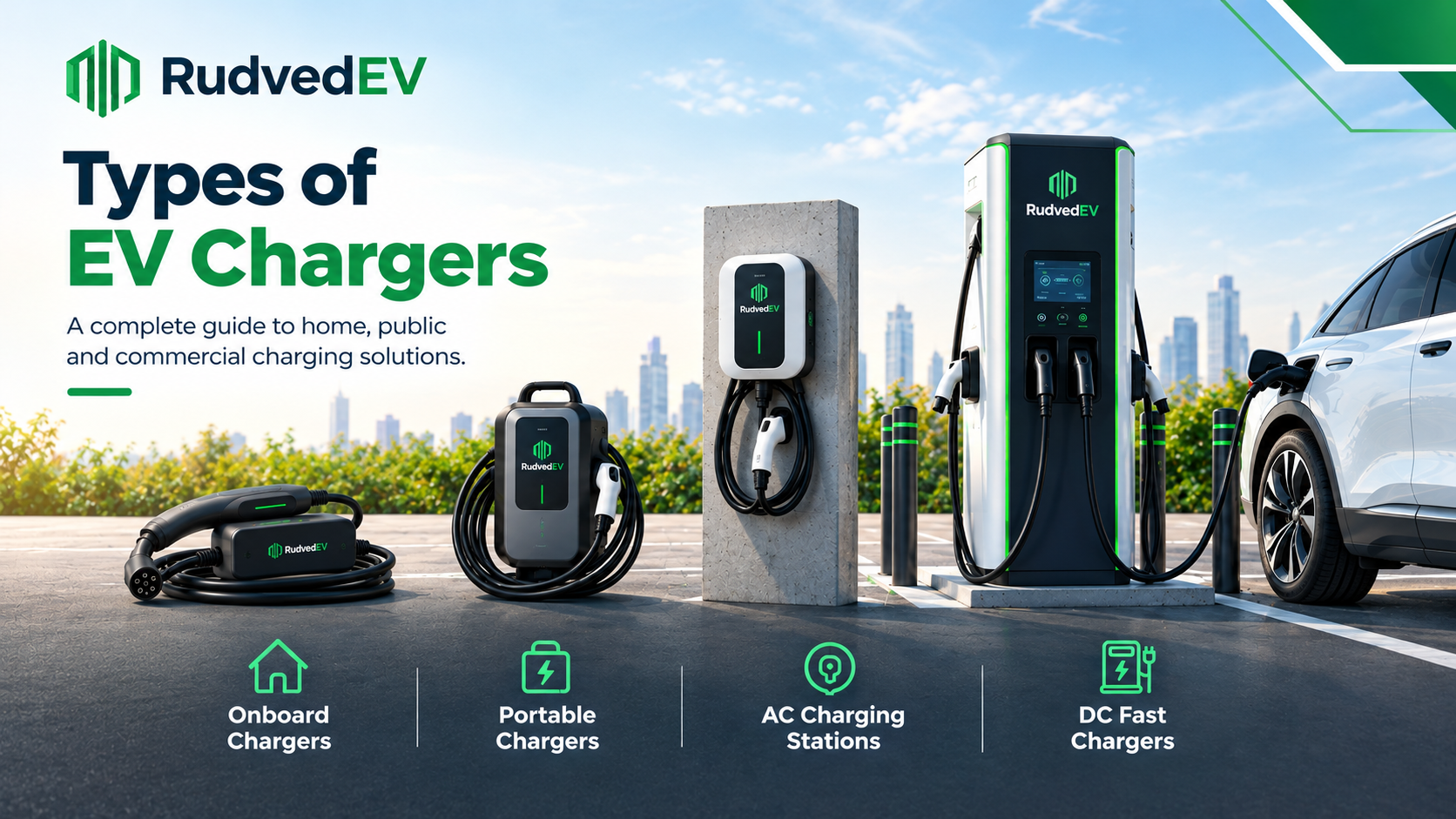
India’s official standards, established by the Bureau of Energy Efficiency (BEE) and ARAI under the NITI Aayog e-AMRIT Standards and Specifications portal, classify charging infrastructure by levels:
| Level | Current & Voltage | Power Rating | Target Vehicles | Compatible Connectors |
|---|---|---|---|---|
| Level 1 (AC) | AC, ~240 V | Up to 3.5 kW | 2W, 3W, 4W | Type 1, Bharat AC-001 |
| Level 1 (DC) | DC, 48 V and above | Up to 15 kW | 2W, 3W, 4W | Bharat DC-001 |
| Level 2 (AC) | AC, 380–400 V | Up to 22 kW | 2W, 3W, 4W | Type 2, GB/T, Bharat AC-001 |
| Level 3 (DC) | DC, 200–1000 V | Up to 400 kW | 4W | CCS2, CHAdeMO, GB/T |
Measured Charging Times for Popular Indian EVs
Charging time calculation formula:
Time (hours) = (Energy Needed in kWh / Effective Power in kW) * 1.15 [accounting for 15% loss]
Below are verified charging durations across standard battery capacities in India:
| Vehicle Model | Battery Size | 3.3 kW AC Home Socket (10–100%) | 7.2 kW AC Wall Box (10–100%) | 50 kW DC Fast Charger (10–80%) |
|---|---|---|---|---|
| Tata Tiago EV | 24 kWh | ~7.5 hours | ~3.5 hours | ~57 mins |
| Tata Nexon EV LR | 40.5 kWh | ~12.5 hours | ~6 hours | ~56 mins |
| MG ZS EV | 50.3 kWh | ~16 hours | ~8 hours | ~60 mins |
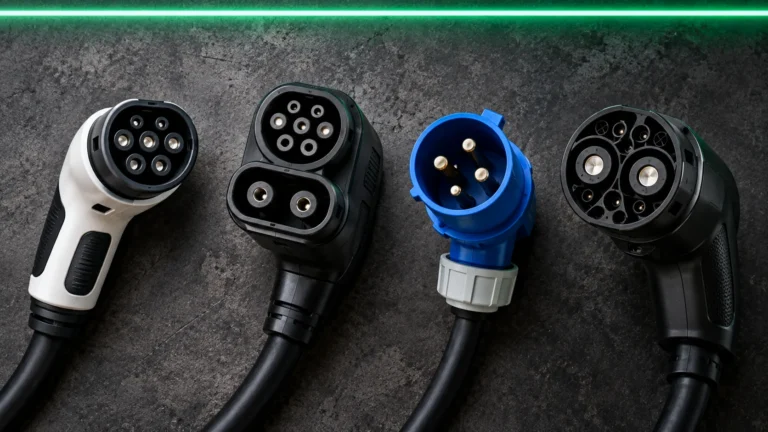
Connector Types: Which Plug Fits Which Charger?
For a detailed technical reference, see our full breakdown of the connector and plug types used in Indian EVs.
| Connector | Current Type | Where You Will Encounter It in India |
|---|---|---|
| Type 2 | AC | Universal AC standard for home wall boxes, office parking, and public AC points across modern electric cars (Tata, MG, Mahindra, Hyundai, BYD). |
| CCS2 (Combined Charging System 2) | DC / AC | The dominant DC fast-charging standard in India. Uses the Type 2 AC shape with two added high-power DC pins below it. |
| Bharat AC-001 / DC-001 | AC / DC | Government-defined standard for light electric vehicles (2W, 3W, and commercial fleets). DC-001 operates up to 15 kW. |
| CHAdeMO | DC | Legacy Japanese standard. Rare in India today; previously found on early imported Nissan Leaf units and select legacy public stations. |
| GB/T | AC / DC | Chinese national standard. Used primarily on commercial electric buses (e.g., Olectra, Tata commercial fleet) and select heavy commercial EVs. |
| Type 1 / CCS1 | AC / DC | North American standard; virtually non-existent on official Indian-spec passenger vehicles. |
AC vs DC: Where the Conversion Happens
- AC Charging (Levels 1 & 2): Alternating current flows from the grid through the station to the car. The car’s onboard charger converts AC to DC to fill the battery. For more details on hardware function, read our complete guide on what an EV battery charger unit actually is.
- DC Fast Charging (Level 3): High-voltage AC grid power is converted to DC inside the stationary charger unit. Power feeds directly into the battery pack, bypassing the car’s onboard charger limitations. Learn more about how DC fast charging works and what it costs.
Two-Wheelers and Three-Wheelers
Electric two-wheelers (Ather, Ola, TVS, Bajaj) and three-wheelers rely primarily on portable chargers plugged into standard 15 A 3-pin Indian sockets (AC Level 1). Charging times range from 4 to 6 hours. Proprietary fast-charging networks (e.g., Ather Grid) or battery-swapping networks (e.g., Sun Mobility, Battery Smart) are common alternatives in tier-1 and tier-2 metro cities.
Home, Workplace, and Public Charging Guidelines
- Home Setup: Install a dedicated 16 A socket with MCB protection and proper grounding (earthing) verified by a certified electrician. Avoid domestic extension cords.
- Workplace: Ideal for 7.2 kW AC chargers to replenish commute usage during typical 8-hour shifts.
- Public Infrastructure: Governed by the Ministry of Power Guidelines for Installation and Operation of EV Charging Infrastructure (2024). Public stations offer lower tariffs during solar hours (9 AM to 4 PM). You can also review the Summary of 2024 Tariff & Service Charge Guidelines. Always verify real-time station operational status via charger aggregator apps prior to long-distance travel.
How to Choose the Right Setup
| Your Situation | Recommended Charger Choice |
|---|---|
| 4W, home parking, daily city commute | 7.2 kW Type 2 AC Wall Box (or 3.3 kW if daily travel is under 40 km). |
| 4W, apartment parking with no dedicated slot | Utilize workplace Type 2 AC chargers or nearby public CCS2 stations. |
| Frequent highway / intercity travel | Plan routes using CCS2 DC fast-charging networks (minimum 30 kW–60 kW points). |
| 2W / 3W owner | Portable OEM charger on a tested 15 A socket; leverage local battery swapping if running commercial routes. |
Frequently Asked Questions
What are the primary EV charger types in India?
By speed, they are divided into Level 1 AC (slow home charging), Level 2 AC (fast wall boxes), and Level 3 DC fast chargers. By connector, passenger cars primarily use Type 2 (AC) and CCS2 (DC).
Can I charge an electric car using a regular home socket?
Yes, most electric passenger vehicles include a portable 3.3 kW charger compatible with a heavy-duty 15 A 3-pin wall socket. Ensure dedicated wiring and earthing before regular use.
Why does DC fast charging slow down after 80%?
To protect the lithium-ion battery from overheating and degradation, the vehicle’s Battery Management System (BMS) throttles the charging current significantly once the state of charge reaches ~80%.
Ready to choose your EV charger?
Browse Rudved EV charger options by power, connector and installation type.