
● Updated August 26, 2026 · Active
Policy Overview
The Maharashtra Electric Vehicle Policy 2025–2030 is the state government's second-generation EV framework, issued by the Transport and Energy Departments of Maharashtra to succeed the 2021 policy after it lapsed in March 2025. It runs for five years, from April 1, 2025 to March 31, 2030, and is backed by a total outlay of ₹11,373 crore — more than eleven times the budget of its predecessor.
In short: the policy combines purchase subsidies for select vehicle categories, blanket road tax and registration waivers, toll exemptions on major expressways, and funding for charging infrastructure, all aimed at pushing electric vehicles to 30% of new vehicle registrations by 2030.
Budget & Targets Breakdown
Of the total ₹11,373 crore outlay, ₹1,993 crore is earmarked specifically for demand-side purchase incentives — a 114% jump over the ₹930 crore the 2021 policy set aside for the same purpose. The remainder funds charging infrastructure grants, manufacturing incentives, and administrative rollout, including a new single-window digital portal for approvals.
- Total policy outlay: ₹11,373 crore over five years (2025–2030)
- Demand incentive budget: ₹1,993 crore (up from ₹930 crore in 2021)
- EV adoption target: 30% of all new vehicle registrations in Maharashtra by 2030
- Disbursal model: first-come, first-served within a fixed vehicle cap per category
Category-Wise Incentive Table
Purchase subsidies are set at a percentage of the ex-factory price, working out to roughly ₹5,000 per kWh of battery capacity, and are capped per vehicle and per category. Once a category's unit cap is reached, that window closes for the year.
| Vehicle Category | Subsidy Rate | Vehicles Covered | Max Subsidy |
|---|---|---|---|
| Electric 2-Wheeler (e-scooter/e-bike) | 10% of ex-factory price | 1,00,000 | ₹10,000 |
| Electric 3-Wheeler – Passenger (e-auto) | 10% of ex-factory price | 15,000 | ₹30,000 |
| Electric 3-Wheeler – Goods Carrier | 15% of ex-factory price | 10,000 | ₹30,000 |
| Electric 4-Wheeler – Commercial/Fleet & Taxis | 15% of ex-factory price | 25,000 | ₹2,00,000 |
| Electric Bus | 10% of ex-factory price | 1,500 | ₹20,00,000 |
| Electric Tractor/Harvester | 15% of ex-factory price | 1,000 | ₹1,50,000 |
Note: Private, non-commercial electric car buyers (M1 – Non-Transport) are not covered by a purchase subsidy under the 2025 policy. They still receive the full road tax exemption and registration fee waiver described below. Only commercial and transport-use electric cars, such as taxis and fleet vehicles, qualify for the ₹2,00,000 subsidy.
Your EV Savings
Rather than guessing, you can estimate your Maharashtra EV subsidy yourself using the policy's own formula — roughly ₹5,000 per kWh of battery capacity, capped at the maximum for your vehicle category. Multiply your vehicle's battery size in kWh by ₹5,000, then check it against the category cap in the table above; whichever number is lower is what you'll actually receive.
| Vehicle Example | Battery Size | Formula (₹5,000 × kWh) | Subsidy Payable |
|---|---|---|---|
| Entry-level e-scooter | 2 kWh | ₹5,000 × 2 = ₹10,000 | ₹10,000 (at the 2W cap) |
| Mid-size e-scooter | 3.5 kWh | ₹5,000 × 3.5 = ₹17,500 | ₹10,000 (capped) |
| E-auto (3W passenger) | 6 kWh | ₹5,000 × 6 = ₹30,000 | ₹30,000 (at the 3W cap) |
This manual calculation gets you close, but the real number also depends on whether the model is on the approved list and whether that category's unit cap has already been reached for the year. To run the numbers for your exact vehicle and see a category-by-category EV calculator breakdown, see the full subsidy breakdown →.
Not sure which incentive applies to you?
Between the state subsidy, road tax waiver and central PM E-DRIVE scheme, the numbers vary by vehicle and category. Our team can map the Maharashtra EV Policy to your exact situation in one conversation.
Talk to an Expert →Central PM E-DRIVE Scheme: Stack It With State Support
Maharashtra's state subsidy doesn't operate in isolation — electric two- and three-wheeler buyers could also draw on the central government's PM E-DRIVE scheme, which paid ₹2,500 per kWh of battery capacity, capped at ₹5,000, applied automatically at the dealer through an Aadhaar e-Voucher. Where both schemes were active together, the combined support meaningfully lowered the on-road price of an electric two-wheeler.
Note: the PM E-DRIVE incentive for electric two-wheelers closed on July 31, 2026. Three-wheeler buyers should confirm current availability on the official PM E-DRIVE portal, since central scheme windows are revised independently of Maharashtra's own policy.
Road Tax, Registration & Toll Waivers — For Every EV Buyer
Unlike the purchase subsidy, these three benefits apply to every EV registered in Maharashtra during the policy period, regardless of whether the vehicle is private or commercial, or whether it qualifies for a purchase subsidy at all.
- Road tax: 100% exemption from motor vehicle tax for all EV categories — 2W, 3W, 4W and buses.
- Registration fee: 100% waiver on both new registrations and re-registrations.
- Toll: passenger EVs travel toll-free on the Mumbai–Pune Expressway, Samruddhi Mahamarg and the Atal Setu (Mumbai Trans Harbour Link).
- GST: every EV in India, including in Maharashtra, is taxed at a flat 5% GST, versus 18–40% on comparable petrol and diesel vehicles — a saving that applies at the point of sale regardless of category.
2021 vs 2025 Policy Comparison
The 2025 policy is a significant step-up from its 2021 predecessor on nearly every metric, with one notable exception — private car buyers lost their purchase subsidy.
| Feature | 2021 Policy (Expired Mar 2025) | 2025 Policy (Active) |
|---|---|---|
| Duration | 2021–2025 (4 years) | 2025–2030 (5 years) |
| Total budget | ₹930 crore | ₹11,373 crore |
| Demand incentive budget | ₹930 crore | ₹1,993 crore |
| E-2W subsidy (first 1 lakh units) | ₹5,000 | ₹10,000 |
| Private car subsidy | Up to ₹1.75 lakh | Removed |
| Fleet/taxi car subsidy | ₹1.75 lakh max | ₹2.00 lakh max |
| E-bus subsidy | ₹20 lakh | ₹20 lakh (unchanged) |
| Fast-charger subsidy | Not a major focus | ₹5 lakh per DC charger |
| EV adoption target | Not specified | 30% of new registrations by 2030 |
Charging Infrastructure Mandates
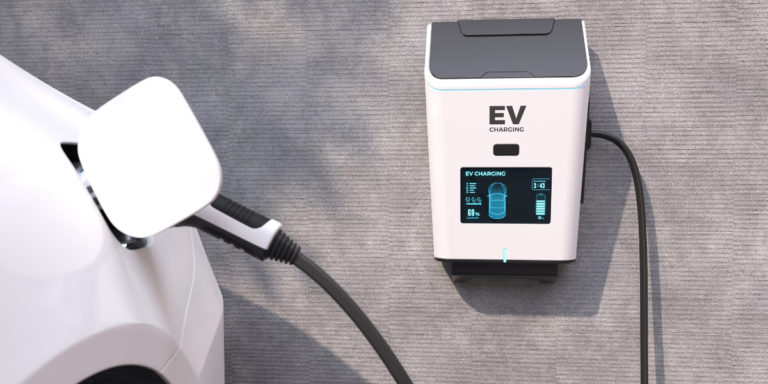
Alongside buyer incentives, the policy funds ₹5 lakh per DC fast charger (1,000 units) and ₹10 lakh per high-power charger (500 units), and mandates a charging point at least every 25 km along state highways. All new stations must support Unified Energy Interface (UEI) protocols for interoperability. Operators setting up a public charging station in Maharashtra can typically draw on this state capital subsidy alongside applicable central incentives, subject to current scheme rules.
EV Charging Cost Calculator: What It Actually Costs to Charge
Beyond the purchase subsidy, your ongoing running cost depends on your electricity tariff and battery size. Maharashtra EV charging stations also benefit from a concessional electricity tariff under MERC Order No. 217 of 2024, which keeps public and semi-public charging cheaper than it would otherwise be.
A rough EV charging calculator: multiply your battery capacity (kWh) by your per-unit electricity rate to get the cost of a full charge, then divide by your vehicle's real-world range to get a cost-per-km figure.
| Vehicle Type | Battery Size | Approx. Cost/Full Charge* | Approx. Cost per km |
|---|---|---|---|
| Electric 2-Wheeler | 2–3 kWh | ₹16–₹24 | ₹0.20–₹0.30 |
| Electric 3-Wheeler (e-auto) | 6–8 kWh | ₹48–₹64 | ₹0.60–₹0.80 |
| Electric 4-Wheeler | 25–40 kWh | ₹200–₹320 | ₹1.00–₹1.50 |
*Illustrative, based on a home tariff of roughly ₹8/unit; actual cost varies with your electricity slab, charger efficiency and driving conditions. Public DC fast chargers typically cost more per unit than home charging but save significant time.
How Maharashtra Compares to Other States
Maharashtra's combination of a meaningful two-wheeler grant, a full road tax exemption and expressway toll waivers puts it ahead of most states on total buyer savings, even though it no longer subsidises private cars.
| State | Max E-2W Grant | Max E-Car Grant | Road Tax | Toll Waiver |
|---|---|---|---|---|
| Maharashtra | ₹10,000 | ₹2,00,000 (commercial only) | 100% exempt | Yes, major expressways |
| Delhi | ₹5,000 + scrapping bonus | ₹1,50,000 | 100% exempt | Partial |
| Gujarat | ₹20,000 | ₹1,50,000 | 100% exempt | Partial |
| Karnataka | No direct cash grant | None | 5–10% for 4W (waiver rolled back Apr 2026) | None |
| Tamil Nadu | ₹5,000–₹10,000 | None | 100% exempt (extended to Dec 2027) | None |
EV vs Petrol Calculator: Real-World Savings in Maharashtra
The subsidy and tax waivers only tell half the story — the bigger long-term saving usually comes from running costs. An EV vs petrol calculator compares three things: the upfront price gap after incentives, the running cost per km, and how many kilometres it takes to break even.
| Factor | Petrol 2-Wheeler | Electric 2-Wheeler (post-subsidy) |
|---|---|---|
| Fuel/energy cost per km* | ₹1.80–₹2.20 | ₹0.20–₹0.30 |
| Road tax | Applicable | 100% exempt |
| Registration fee | Applicable | 100% waived |
| Purchase subsidy | Not applicable | Up to ₹10,000 |
| Approx. running cost for 10,000 km/year | ₹18,000–₹22,000 | ₹2,000–₹3,000 |
*Illustrative figures based on typical mileage and average fuel/electricity prices; actual savings depend on your specific vehicle models, local fuel prices and electricity tariff. On these assumptions, most riders recover the EV's higher upfront price within one to two years of regular use, before even counting the subsidy and tax waivers — after which the electric vehicle keeps costing less to run for the rest of its life.
Ready to see your own numbers side by side?
Every rider's break-even point is a little different depending on daily distance, current fuel spend and vehicle choice. Talk to our team for a personalised EV vs petrol comparison before you buy.
Talk to an Expert →How to Claim Your Subsidy in Maharashtra
Apply through the Maharashtra EV/transport portal after registering your vehicle. The amount is paid by Direct Benefit Transfer (DBT) to your bank account, typically within 30–45 days.
- Road tax & registration waiver: this is applied directly at the RTO when you register the vehicle — confirm with your dealer that the exemption has been factored into your on-road price before you pay.
- Central PM E-DRIVE (where applicable): for eligible categories, this is credited automatically at the dealer via an Aadhaar e-Voucher, so there's usually no separate form to file.
- Scrappage benefit: if you're replacing an old ICE vehicle, submit a Certificate of Deposit from a Registered Vehicle Scrapping Facility at the time of purchase to claim the added rebate.
- Keep your paperwork: retain your RTO registration certificate, purchase invoice, and any scrappage certificate — dealers and the portal may ask for these to process DBT payments.
Frequently Asked Questions
It's a five-year state government policy (April 2025–March 2030) that offers purchase subsidies on select EV categories, a 100% road tax exemption, a registration fee waiver, and toll-free travel on major expressways, backed by a ₹11,373 crore budget.
The subsidy varies by category: up to ₹10,000 for two-wheelers, ₹30,000 for three-wheelers, ₹2,00,000 for commercial/fleet four-wheelers, and ₹20,00,000 for electric buses.
No. Under the 2025 policy, private non-commercial electric car buyers do not receive a purchase subsidy. Only commercial and transport-use electric cars, such as taxis and fleet vehicles, are eligible. Private buyers still get the road tax exemption and registration fee waiver.
Yes. The 100% road tax exemption and registration fee waiver apply to all EV categories and to both private and commercial buyers, independent of purchase-subsidy eligibility.
The policy runs for five years, from April 1, 2025 to March 31, 2030.
Eligible electric two- and three-wheeler buyers could also draw on the central PM E-DRIVE scheme (₹2,500/kWh, capped at ₹5,000), applied automatically at the dealer. The electric two-wheeler incentive under this central scheme closed on July 31, 2026; check current availability for three-wheelers on the official PM E-DRIVE portal.
All electric vehicles in India, including in Maharashtra, attract a flat 5% GST, compared with 18–40% on equivalent petrol or diesel vehicles. This applies uniformly and isn't dependent on the state purchase subsidy.
Yes — use the ₹5,000/kWh formula in the EV subsidy calculator section above for a quick estimate, or check the full subsidy breakdown for a category-by-category figure. For running costs, the EV vs petrol and EV charging cost calculators in this guide give you a realistic side-by-side comparison.
Sources & Disclaimer
- Government of Maharashtra — official state policy portal
- Maharashtra State Electric Vehicle Policy 2025–2030 — official notification, Transport & Energy Departments
- Ministry of Heavy Industries — PM E-Drive / FAME scheme documentation
- PIB releases and GST Council notifications on EV taxation
Disclaimer: Subsidy amounts, unit caps and eligibility rules are set by government notification and can change or be revised mid-cycle. This page is a summary for informational purposes — always confirm current figures on the official state portal or with an authorised dealer before making a purchase decision.
Go electric without the guesswork
From checking your exact subsidy to picking the right vehicle and charger, Rudved EV helps you navigate the Maharashtra EV Policy end to end. Speak with our specialists today.
Talk to an Expert →Related: Charging Your New EV
This guide covered the charging cost math and the state's mandate for a charging point every 25 km — the natural next question is where you'll actually plug in.
Bought the EV? Now sort the charger.
Rudved EV supplies and installs UEI-compliant EV chargers for homes, housing societies and businesses across Maharashtra, sized to your sanctioned load and daily driving. Get a free feasibility check before you buy.
Talk to an Expert →Ready to choose your EV charger?
Browse Rudved EV charger options by power, connector and installation type.